Friday, March 11, 2016

Foods to protect against EMF exposure

Cell phone radiation is very real and so are its effects on your body. As useful as a cell phone can be, they pose quite a threat by exposing the body to radio-frequency electromagnetic fields which in turn can reduce the nutritional value of food and increase toxicity. While the most effective solution is avoidance, you can also combat the side effects of cell phone radiation by knowing what’s right to eat. 

1. Kale
It is packing in Vitamin C which is a great source of antioxidants, crucial in protecting the watery layer of your cells. Kale is also rich in caffeic acid, a component that can effectively work against radiation and protect the lymphocytes. 


2. Cod Liver Oil
Researchers have documented that vitamin D3 protects the nervous system besides promoting calcium absorption. Cod liver oil has lots of D3 while carrying a healthy ratio of omega-3 fatty acids to omega-6 fatty acids. Omega-3 helps repair fatty cell membranes while Omega-6 promotes inflammation in the body, so a healthy ratio is very important.


3. Turmeric
This golden-yellow spice is packed with curcumin which a great antioxidant and has anti-cancer properties. Primarily, turmeric behaves as a DNA mechanic, repairing them so your body functions better. It also promotes the binding of iron to your blood cells. The golden rule when ingesting turmeric with your food is to add a dash of black pepper for increased absorption and effectiveness!

 I know this goes against what I was taught as a kid ("black pepper is bad for you"), but turns out, not so much.....
4. Almonds
A small handful of these a day can go a long way for your body. Almonds are packing in vitamin E which protects nerve membranes and slows down the oxidizing of cells’ fat membranes. Almonds are also rich in antioxidants and they’re great for balancing out an acidic body environment as they are one of the few alkaline nuts out there. 

Moderation is key here.....a handful, not the whole bowl.
5. Asparagus
Cell phone radiation is known to reduce the amounts of glutathione in your body.  (Glutathione is the mother of all antioxidants) Asparagus packs in glutathione AND selenium, both which are antioxidants capable of repairing DNA, dispelling useless molecules and removing heavy metal from the body.


6. Kelp
For a combo pack of minerals, kelp (the green kind) is the go-to food. They are also an excellent source of magnesium, a mineral that needs to be balanced out with calcium at a ratio of 1:2 for better calcium absorption. Eat sparingly as you don’t want to overload your body with too many minerals.


7. Garlic
Garlic is laden with sulfur and this component promotes detoxification in the body as well as a conversion of vitamins and proteins. Garlic can also cut off mercury from seafood and fish when cooked together. Cook it in some olive oil to enhance absorption.


8. Artichokes
While artichokes are rich in vitamin C and magnesium, it’s made it to the list for carrying silymarin. This substance is known for increasing the levels of glutathione in your body and the more glutathione you have, the less toxic your body will be.


9. Whole grains
Unrefined and unfortified whole grains are a healthier source of carbs, but they are also high in vitamin B-complex which is crucial in nerve repair. Brown rice and millet are all great sources of vitamin B and folic acid.


EMF

As I am getting ready to hop on a plane for 15+ hours I am trying to protect myself from EMFs. What is an EMF Radiation? Electromagnetic Field Radiation. Do I understand it? NO. Do I believe it exists? YES. "EMFR is created by an accumulation of electrical charge. It permeates the world we live in but is invisible to the human eye. EMFR can be naturally occurring and is part of the Earth’s Magnetic Field that orients a navigational compass. EMFR is also generated by natural phenomena such as thunderstorms." In addition to these natural sources, EMFR is emitted by artificial devices. Examples of human EMFR sources include:
      X-rays
      Radiowaves
      Television antennas
      Mobile phone base stations
      Cordless and mobile cell phones
      Microwaves

If you sleep with a cell phone or computer near your bed, it can disrupt your sleep, impair your memory and cognitive functions. These EMFRs have even been linked to infertility and Alzheimer's. The more time we spend on our cell phones and on our computers, the more exposure you get.

So what do we do to protect ourselves? Limiting your use of cell phones and computers is not always possible. There are devices you can use to block these radioactive waves from your person. You can put "energy blockers" on your electronics.

You can also eat more antioxidants in your food (oh you knew I was going to throw that in there!). To prepare for my trip on this radioactive tube called a plane, I am upping my intake of antioxidant foods and supplements (Juice Plus+ for me). I am taking extra on board as I fly. I am increasing my magnesium and phosphates. I am drinking bottles of water (yes, my seatmate might not like that I have to make many trips to the toilet, but I am going to flush out toxins!). I have ordered vegan meals to make sure I get the best food available while in flight.

This is something you will need to research for yourself. The precautions I take, I feel, have made a difference in my travel. I make this trip often enough to know that it does help.

Well, I hear they are calling my flight number after a 4 hour delay in departure......better to know about problems before you take off for a 15 hour flight than while in the air. I hope to see all of you while I am "home." G'Day Mate! Gale

Wednesday, February 24, 2016

Sugar Subs

OK, just one more about sugar, then I'll get off this kick (for a while), I promise. I have been learning so much about the types of sugar we use and trying to live what I've learned. I am a sugar addict. I have now been off sugar (fructose) for two months and can really feel the difference. I feel more in control of my eating. I'm not saying I will never eat fructose again.....I do like to have my cake and eat it too.....but not as a daily habit like before. I must state here that I am not talking about any of the sugar (including fructose) in fruits and vegetables. Fruits and vegetables in the whole form should not be limited. Let's face it, it would be hard to eat any harmful amount if you eat the whole fruit.

When you quit sugar there are a host of sugar substitutes that are used in recipes and food products to replace the sweetness. Many of these I have recommended in the past thinking they were the answer. Unfortunately most of them are still packed full of fructose (the bit we’re trying to avoid), and in some instances contain more fructose than regular table sugar. Beware!

Sucrose is also known as white table sugar, brown sugar, raw sugar and rapadura sugar. It contains 50 per cent fructose and 50 per cent glucose.

Agave is a sugar substitute made from the same Mexican succulent that tequila is made from. It contains roughly 90 per cent fructose – higher than sucrose! Look out for it in “health” bars and chocolate.

Coconut sugar/nectar/syrup, you’ll often find one of these variations of coconut sugar in many health food products. Unfortunately it contains anywhere between 38 per cent to 48.5 per cent fructose, which is almost the same amount found in sucrose. (There are some positives: It is the most nutritious of the possible sugars. It’s the single most sustainable sweetener in the world. Coconut sugar has an extremely low glycemic index of 35. However, it still has significant amounts of fructose)

Honey, whether it’s raw or organic doesn’t matter when it comes to fructose content. Honey contains 40 per cent fructose, which is only 10 per cent less than sucrose. There are many health benefits of honey, so you will have to listen to your body on this one.

Maple syrup is often used as a healthier sugar alternative. Unlike other sugar substitutes it does have some health benefits but still contains up to 40 per cent fructose.

Dates are often used to sweeten “sugar-free” recipes, but they contain roughly 30% fructose. Plus they often need to be used in large quantities to get the same sweetness.

Rice malt syrup is made from fermented cooked rice. It’s a blend of complex carbohydrates, maltose and glucose. It’s 100 per cent fructose free. It is my fructose-free sweetener of choice.

Stevia is a plant-based sweetener. It’s completely fructose free and 300 times sweeter than sugar. It’s great in recipes where you want to add a little sweetness, but avoid using it in large quantities as it can have a bitter aftertaste. A drop or two of liquid stevia in a hot cup of tea is perfect!


If you'd like to know more about this subject you can find my sugar-free inspiration at www.iquitsugar.com. My daughter recently gave me the book, Simplicious, and I have gleaned so much from it, including some great recipes. As always, if you have any questions please feel free to contact me at gale4health@yahoo.com.

Friday, February 19, 2016

More about Sugar

Sucrose (ordinary table sugar) is made up of 50 per cent glucose and 50 per cent fructose.
It’s the fructose bit that is the harmful type of sugar. Other sugars (glucose, maltose and lactose) are safe to eat in moderation. But fructose is not. Some sweeteners contain an even higher fructose ratio than sucrose, like agave. It can contain up to 90 per cent fructose!

Why is fructose bad for us? It passes directly to our livers and promotes fat storage. Fructose can only be processed by the liver, which increases the workload and potentially contributes to non-alcoholic fatty liver disease.

Fructose is addictive. Some studies say it’s more addictive than cocaine and heroine. Our bodies are designed to gorge on fructose because it’s such a nifty source of fat; great back in days when we had to hunt and grow our own food, not so much today.

Fructose makes us eat more. Unlike all other food molecules, fructose has no corresponding “we’re full now, stop eating” switch (or enzyme) in our brain. This means we can keep eating and eating the stuff without getting satiated.

It also increases another hormone, ghrelin, which makes us feel hungrier. Fructose makes us sick. Countless studies link fructose consumption to a host of metabolic disorders, including immune disorders, cancers, diabetes… and the list goes on.

Studies show that when we’re not consuming fructose, the right appetite hormones switch on and you can stop after that one slice, and not need to have dessert every night.

What should we use when we need a little “sweetener” in our recipes? There are two safe options.
1. Rice malt syrup: a complex carbohydrate blend of glucose and maltose, which is completely fructose-free and slow releasing, so it doesn’t dump on the liver like fructose does. Rice malt syrup is made from fermented cooked rice. It’s a blend of complex carbohydrates, maltose and glucose.
2. Stevia: a plant-derived sweetener containing no sugar of any kind. Research has shown that stevia is one of the safest and easiest options to cook with.

Play around with using these alternatives to conventional sugar. I think you will enjoy your food AND reduce your cravings for the harmful stuff. Both are available at most grocery stores and for sure at Health Food Stores.


Sugar

The World Health Organization recommends no more than 25g of sugar per day for optimum health. That’s six teaspoons! That’s easy! you say. "There’s no way I reach that amount every day, I only eat healthy sugars, apart from the odd treat!" Well, lets take a look at what six teaspoons of sugar looks like:

A small box of raisins (1 oz) - Dried fruit, while better than candy, is condensed little pellets of sugar without the added water to keep you full.

2/3 of a can of Coke - You already know that Coke is full of sugar, but did you know that one regular sized can has over nine teaspoons of sugar?

1/2 bottle of apple juice - With Apple Juice we have the opposite problem to dried fruit – the water stays, but the fiber is stripped out. A cup of apple juice can contain three to four apples… now could you eat that many in one go? Just eat the whole fruit.

One single serve tub of low-fat strawberry yogurt - When manufacturers take the fat out of yogurt, they have to replace it with something to make it palatable. That’s why low-fat fruit yogurts have up to six teaspoons of sugar per tub. Better to eat the whole fat version, plain, with your own fresh fruit.

Two bars of 85% dark chocolate - You’d find it difficult to eat 2 whole bars of dark chocolate, which is why the low-sugar treat is encouraged when we’re reintroducing sweetness to our diets. I admit, I use small bites of dark chocolate to treat myself, a little at a time.

Even the "good" sweets should be eaten with caution. Read the labels in order to keep your sugar content down.......or better yet, stay away from packaged foods and eat the whole food instead.

Bonus - recipe for a healthy dark chocolate:

Basic Raw Chocolate
Makes about 1 1/3 cups
1 cup coconut oil, softened
1/3 cup raw cacao powder
1 Tablespoon rice malt syrup
2 pinches of salt

Blend all the ingredients in a blender until smooth (or mix by hand). Pour into small silicone molds or ice-cube trays and keep in the freezer for up to 3 months.

Rice malt syrup is relatively slow-releasing so it does not dump on the liver as much as pure glucose. I think you fellow chocoholics will find this chocolate very satisfying. Enjoy!


Wednesday, February 10, 2016

Ten Health Discoveries Scientifically Proven in 2015

Don't you love it when Science validates Common Sense? There were several great health studies published in 2015, which is very gratifying for us health nuts. They definitely affect our decisions for nourishment and lifestyle in small and large ways.
The latest scientific health research is helpful in making good decisions. Here are 10 Health Discoveries scientifically proven in 2015:

1. Highly Processed Foods Linked To Addictive Eating (University of Michigan)
2. Sleep Is Important For Weight Loss and Optimal Health.
(American Academy of Sleep Medicine & Sleep Research Society)
3. Mental Health Prescription: Nature (Proceedings of the National Academy of Sciences of the United States of America)
4. Carbonated Drinks Associated With A High Risk of Out-Of-Hospital Cardiac Arrest (European Society of Cardiology)
5.  Our Biological Age Is More Important Than Our Chronological Age (The Dunedin Study)
6. Bacon, Hot Dogs And Other Processed Meats Cause Cancer (World Health Organization) - Notice they didn't say MAY cause cancer, but they do cause cancer. They concluded that one 50 gram portion of processed meat eaten daily increases the risk of colorectal cancer by 18 percent. 
7. E-Cigarette Flavors May Cause ‘Popcorn Lung’. (Environmental Health Perspectives)
8. Artificially Sweetened Soft Drinks and Secondhand Smoke Linked to Risk Of Early Menstruation (American Journal of Clinical Nutrition)
9. Practicing Yoga, Meditation Can Result In Fewer Doctor Visits (Benson-Henry Insititute for Mind Body Medicine) 
10. Obesity More Dangerous Than Lack of Fitness (Science Daily) What the study found is that high fitness in obese people reduces early death.

What did YOU discover in 2015 that made a difference to you?


Saturday, January 23, 2016

Winter Foods that are Slimming


Pumpkin - Since the most popular pumpkin dish is pie, you may have written off pumpkin as a weight-loss food. However, pumpkin is actually great for slimming down. One cup of pure canned pumpkin has only 83 calories, hardly any fat, and a whooping 7 grams of fiber! The orange flesh of pumpkin is also a great source of phytochemicals, which help keep blood sugar and insulin lower. Lower insulin levels help you burn fat instead of storing it. Try making a pumpkin soup.

Butternut Squash - Butternut squash is another great weight-loss food. One cup of cooked cubes has only 82 calories, hardly any fat, and an amazing 7 grams of fiber!

Butternut squash will keep your blood sugars lower. That makes it a better carb-craving fix than white potatoes. (email me for a fantastic corn chowder made with butternut squash)


Sweet potatoes are a great weight-loss food because they’re low-fat, relatively low-calorie and fiber-rich. One cup of cooked sweet potato has about 7 grams of fiber. (A medium sweet potato is 103 calories with 4 grams of fiber.)
It’s unfortunate that so many people trying to lose weight avoid sweet potatoes because they are starchy. Though that is true, sweet potatoes are whole, fiber-rich starch, which helps you feel full and satisfied while losing weight.

Apples - Even though they’re sweet, apples are loaded with water and fiber (four grams for a medium apple) and only 95 calories.

Research shows that eating an apple before a meal will help you eat 100-150 calories less during the meal itself. And overweight women who added three apples a day to their usual diet for 10 weeks, ate fewer calories and lost more weight than those women who didn’t.

And here’s a lesser-known benefit of eating apples--they help increase the amount of good gut bacteria. And research shows that weight loss becomes easier as good gut bacteria numbers increase.

Cranberries - Fresh and frozen cranberries are a low-calorie, natural fiber food--just 23 calories in ½ cup of fresh cranberries, with two grams of fiber.


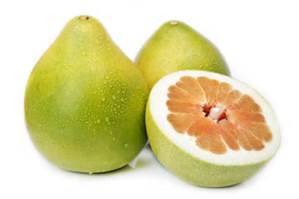
Pomelos - Pomelos, otherwise known as Chinese grapefruit or Shaddock, are the ancestor of grapefruit and originated in China. They’re pale green or yellow with a unique sweet and spicy flavor, not bitter like grapefruit. They contain a rare fat burning enzyme that also appears to help protect against the insulin resistance that leads to weight gain.


Pomegrantes - Pomegranate seeds are low in calories (¾ cup is only 83 calories), high in fiber (¾ cup has 4 grams of fiber) and high in nutrition. Several of the powerful compounds in pomegranate seeds help decrease insulin resistance, which, in turn, makes it easier for the weight to come off.


Persimmons - Persimmons are a great weight loss food because they’re low-calorie and high-fiber. A typical persimmon is only 118 calories and has 6 grams of fiber and less than a gram of fat.

But there’s another reason persimmons are especially good for weight loss: they contain an orange pigment that research has shown actually helps prevent and reverse insulin resistance, which, overtime, can help you lower your blood sugar and burn fat instead of storing it.

Brussel Sprouts - Like most vegetables, Brussels sprouts are a great weight-loss food, because they’re low-calorie, contain almost no fat, are fiber-rich and very filling. They also provide a nice amount of protein to help you feel satisfied after eating. One cup of cooked Brussels sprouts has only 56 calories, plus 4 grams of fiber, 4 grams of protein, and almost no fat. An additional bonus, they contain 56 mg of calcium.

This means you can eat 2 cups for only 112 calories and a whopping 8 grams of fiber and protein.

Eat well and watch the pounds dissolve away!